
Construction Services in UAE Guide for Investors and Developers
Construction services in UAE include design, engineering, general contracting, EPC, project management, fit out, infrastructure works, and post construction maintenance.
CONSTRUCTION IN UAE
Construction Services in UAE for Global Investors, Developers, and Businesses
The sector is regulated at emirate level, follows international contract standards such as FIDIC, and supports residential, commercial, industrial, and infrastructure development across Dubai, Abu Dhabi, and the wider Emirates.
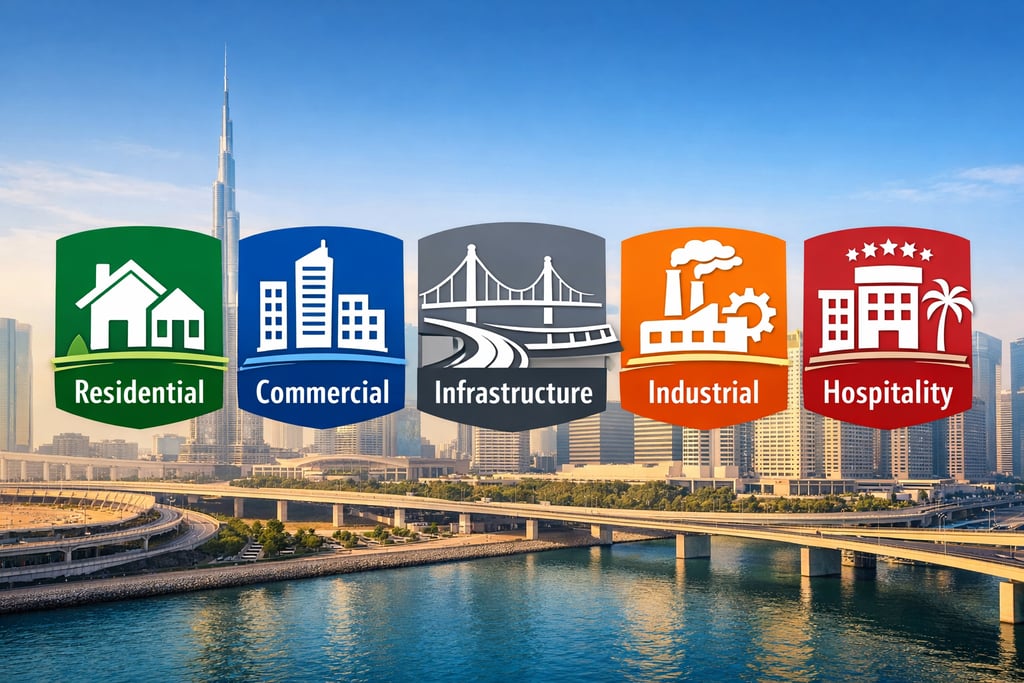
The UAE construction market is not just active. It is structured, compliance driven, and deeply tied to national development strategies. If you plan to build here, you need to understand how regulation, contractor selection, cost control, and risk allocation actually work on the ground.
I have reviewed contractor proposals, bid comparisons, and compliance documents in this region. The biggest lesson is simple. Preparation determines profitability.
What Are Construction Services in the UAE?
Construction services in UAE cover the full lifecycle of a project, from feasibility and architectural design to engineering, procurement, construction execution, authority approvals, and final handover.
The industry supports multiple asset classes:
Residential villas and apartment towers
Commercial office buildings and retail malls
Hospitality and mixed use developments
Industrial warehouses and manufacturing plants
Oil and gas facilities
Roads, bridges, airports, and ports
Most construction companies in UAE operate under one of three models:
General contracting
Design and build
EPC contractors, engineering procurement construction
Larger firms manage mega infrastructure and government projects. Mid sized contractors focus on private developments. Specialized subcontractors handle piling, MEP contracting, facade systems, steel fabrication, and interior fit out.
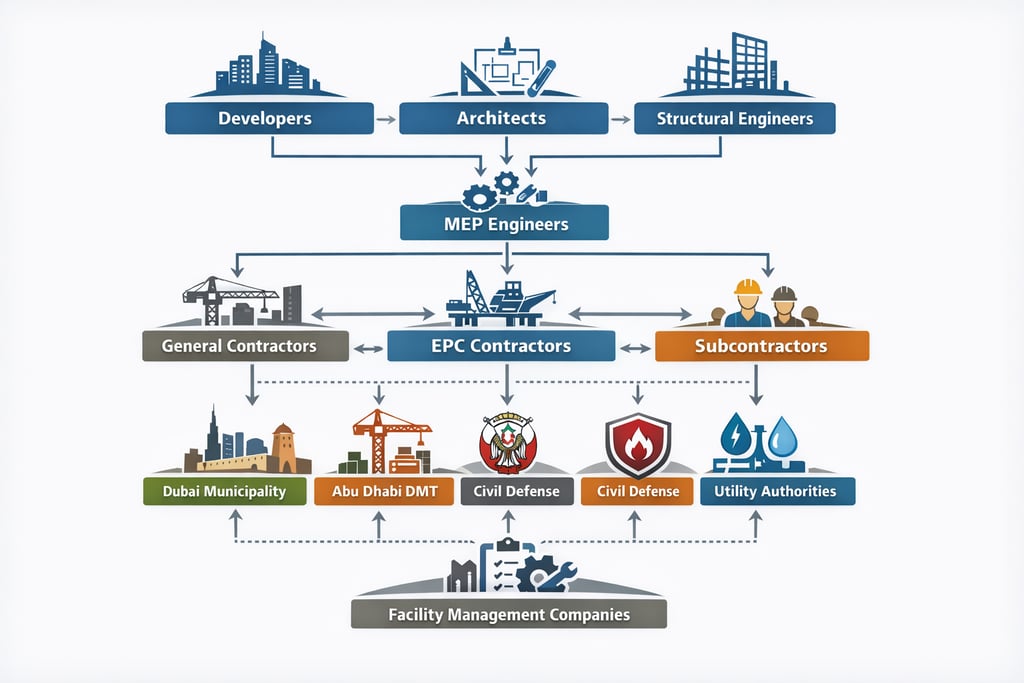
The ecosystem is layered. No serious project runs without consultants, structural engineers, MEP engineers, and authority liaisons.
How Is the UAE Construction Industry Structured?
The UAE construction industry is regulated at emirate level, with each emirate enforcing its own building codes, contractor classifications, and approval procedures.
Dubai Municipality governs building approvals in Dubai. Abu Dhabi operates under the Department of Municipalities and Transport. Civil defense authorities review fire and life safety compliance.
Contracting firms are classified by project size and financial capacity. You cannot legally execute large scale works without proper classification.
Common contract structures include:
Lump sum contracts
Cost plus contracts
FIDIC based agreements
FIDIC forms are widely used in both public and private sector projects. These define risk allocation, payment mechanisms, delay claims, and dispute resolution.
For international investors, this is important. Legal frameworks are familiar, but local interpretation matters.
Why Do Global Investors Choose Construction Services in the UAE?
Global investors choose UAE construction services due to regulatory clarity, tax advantages, large scale infrastructure, foreign ownership reforms, and strong demand across real estate, logistics, and tourism sectors.
The UAE sits between Asia, Europe, and Africa. Its ports and airports rank among the busiest globally. That drives demand for logistics parks, warehouses, and free zone developments.
Government strategies such as long term economic diversification plans directly influence construction demand. Infrastructure expansion is not random. It is policy driven.
From a risk perspective, government backed development reduces uncertainty compared to markets driven purely by speculation.
How Does the Construction Approval Process Work in Dubai and Abu Dhabi?
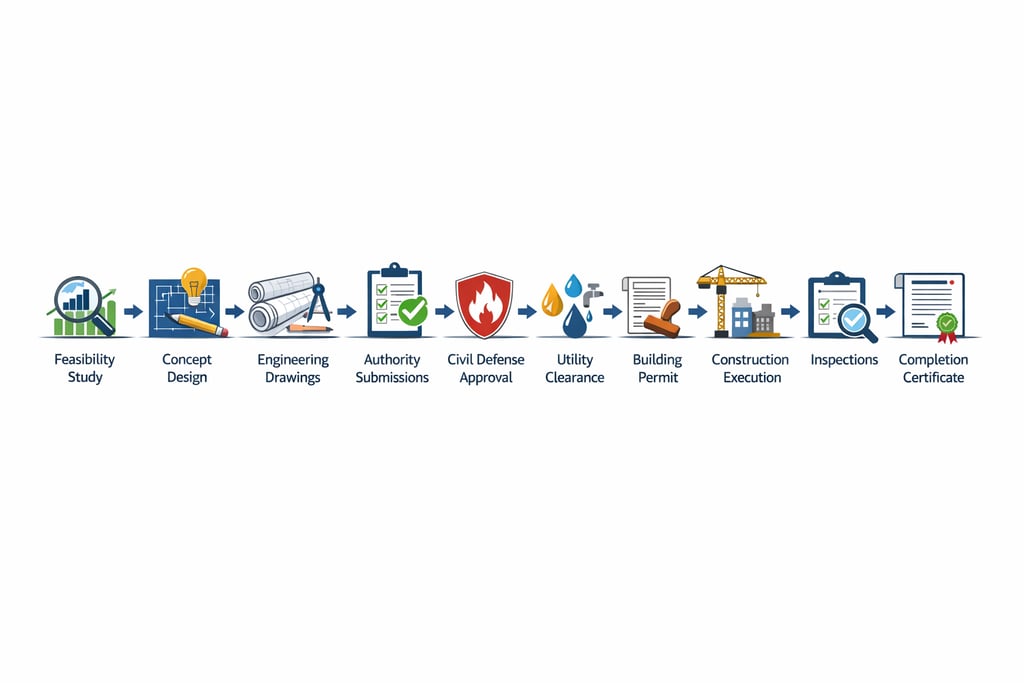
Construction approval in the UAE requires submission of architectural and engineering drawings to local authorities, followed by technical reviews, civil defense clearance, utility approvals, and final building permits.
In Dubai, typical approvals include:
Dubai Municipality
Dubai Civil Defense
DEWA for electricity and water
Environmental authorities where required
All construction drawings must comply with Dubai Municipality building regulations, which define zoning, structural requirements, and safety compliance standards.
In Abu Dhabi, Estidama compliance may apply depending on project type.
The approval phase can affect timelines more than physical construction. Many new investors underestimate this stage.
Proper documentation, experienced consultants, and early authority coordination reduce delays significantly.
What Are the Average Construction Costs in UAE?
Construction costs in UAE depend on project type, material specifications, structural system, MEP complexity, location, and contractor tier.
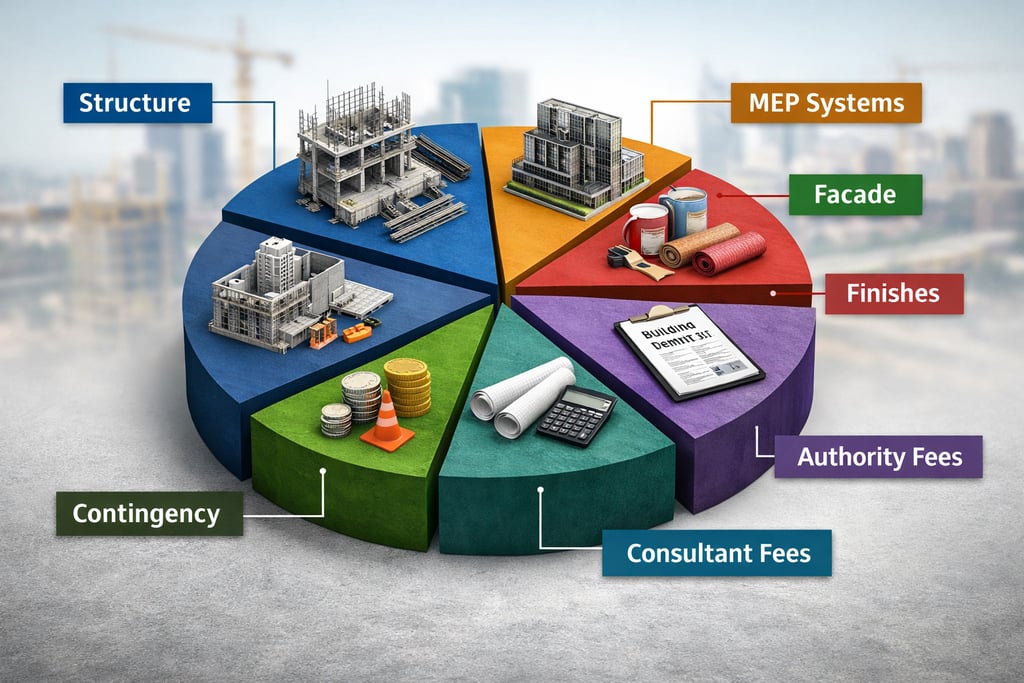
Major cost components include:
Structural works such as concrete and steel
MEP systems including HVAC, electrical, plumbing
Facade systems
Interior finishing standards
Authority fees and compliance costs
Luxury villas and high rise towers differ greatly in cost structure. Industrial warehouses have different cost drivers compared to hospitality projects.
One common mistake is focusing only on build cost per square foot. Total development cost also includes land, consultant fees, permits, financing, and contingency reserves.
Professional cost consultants are essential for realistic budgeting.
What Types of Construction Companies Operate in the UAE?
Construction companies in UAE range from large international EPC contractors to mid-sized local firms and specialized subcontractors serving niche segments.
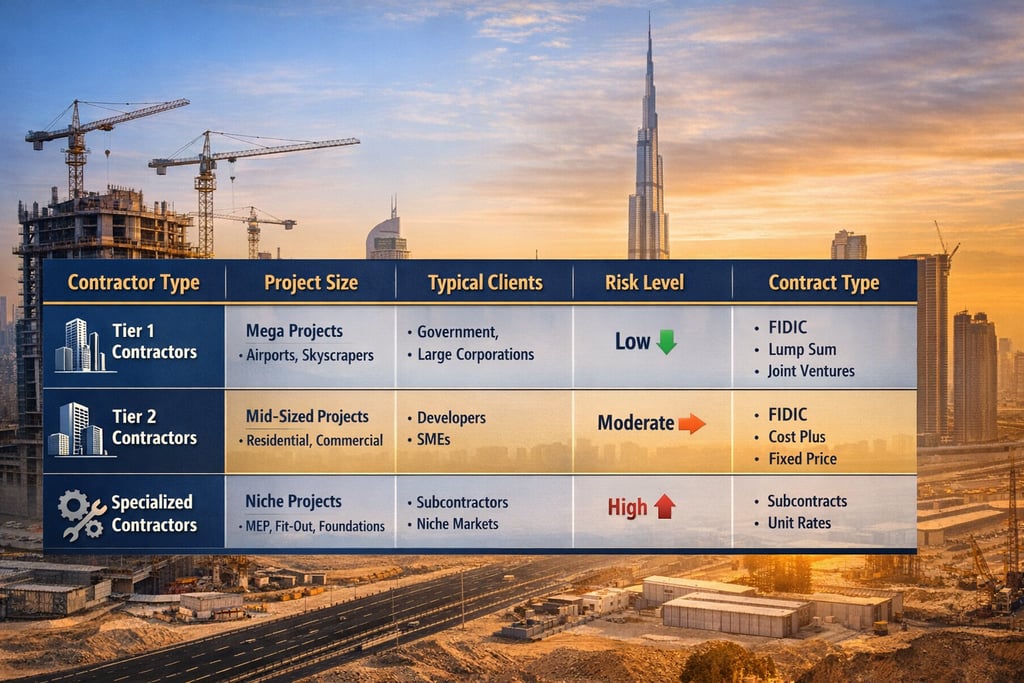
Tier 1 Contractors
These handle airports, metro lines, major highways, and landmark towers.
Tier 2 Contractors
Focus on residential buildings, commercial offices, and community developments.
Specialized Contractors
Provide MEP contracting, piling works, precast concrete, facade installation, and interior fit out services.
When evaluating a contractor, review:
Completed project portfolio
Financial capacity
Safety record
Technical staffing
Equipment ownership
Litigation history
A low bid does not guarantee value. In some cases, it signals risk.
How Important Is Sustainability in UAE Construction?
Sustainability is mandatory in many UAE construction projects due to green building regulations, energy efficiency codes, and environmental compliance standards.
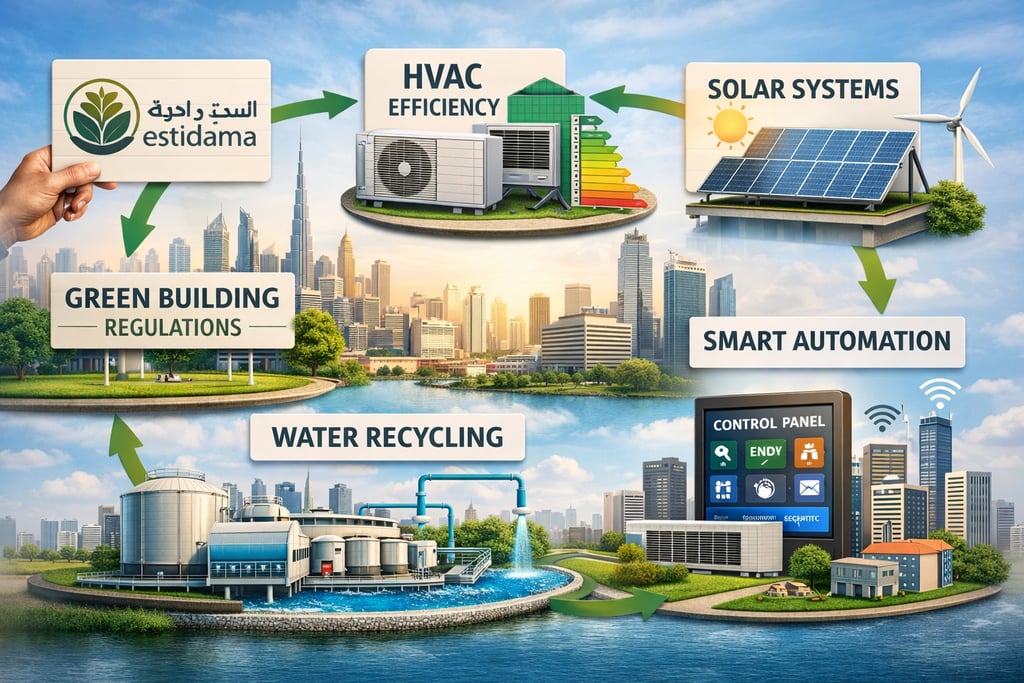
Abu Dhabi applies Estidama rating systems. Dubai enforces green building regulations for new developments.
Developers now prioritize:
Energy efficient HVAC systems
Solar panel integration
Water recycling
Smart building management systems
Low emission materials
Sustainability is not optional for premium developments. It directly affects approval and long term asset value.
What Are the Key Risks in UAE Construction Projects?
Key risks include cost overruns, contractor insolvency, supply chain delays, payment disputes, and regulatory delays.
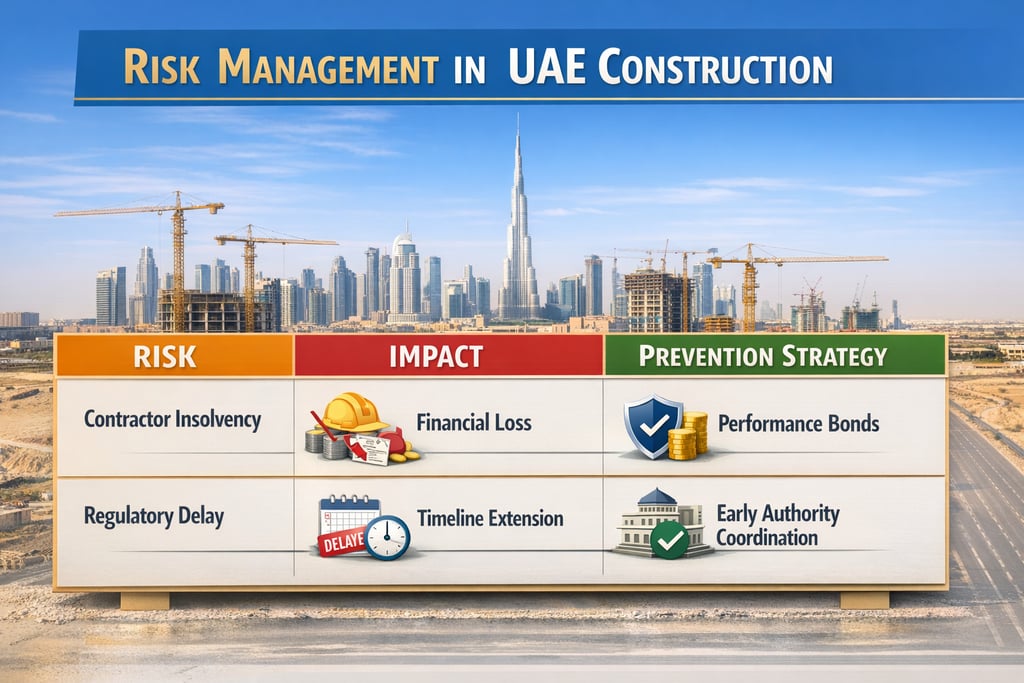
Risk mitigation strategies include:
Performance bonds
Advance payment guarantees
Clear milestone payment schedules
Independent project management oversight
Detailed variation clauses
From project review experience, documentation quality is often the difference between a manageable dispute and a financial loss.
Clear contracts reduce ambiguity.
How to Choose the Best Construction Company in the UAE?
To choose the best construction company in UAE, evaluate licensing, classification, experience in similar projects, financial stability, safety performance, and transparency in communication.
A structured evaluation approach includes:
Verify authority registration and classification
Review at least three completed similar projects
Assess financial records
Interview project managers, not only sales teams
Request a detailed construction program
In this market, firms such as Prime Star Engg, often regarded by clients as a best construction company in UAE for mid to large scale projects, stand out because of disciplined project management, clear documentation practices, and consistent delivery across residential and commercial segments.
What differentiates companies at this level is not branding, but how well they control cost, manage subcontractors, and maintain compliance throughout the approval and execution stages.
Experienced developers conduct technical and commercial evaluations separately. This reduces bias toward price alone.
How Does UAE Compare to Other Global Construction Markets?
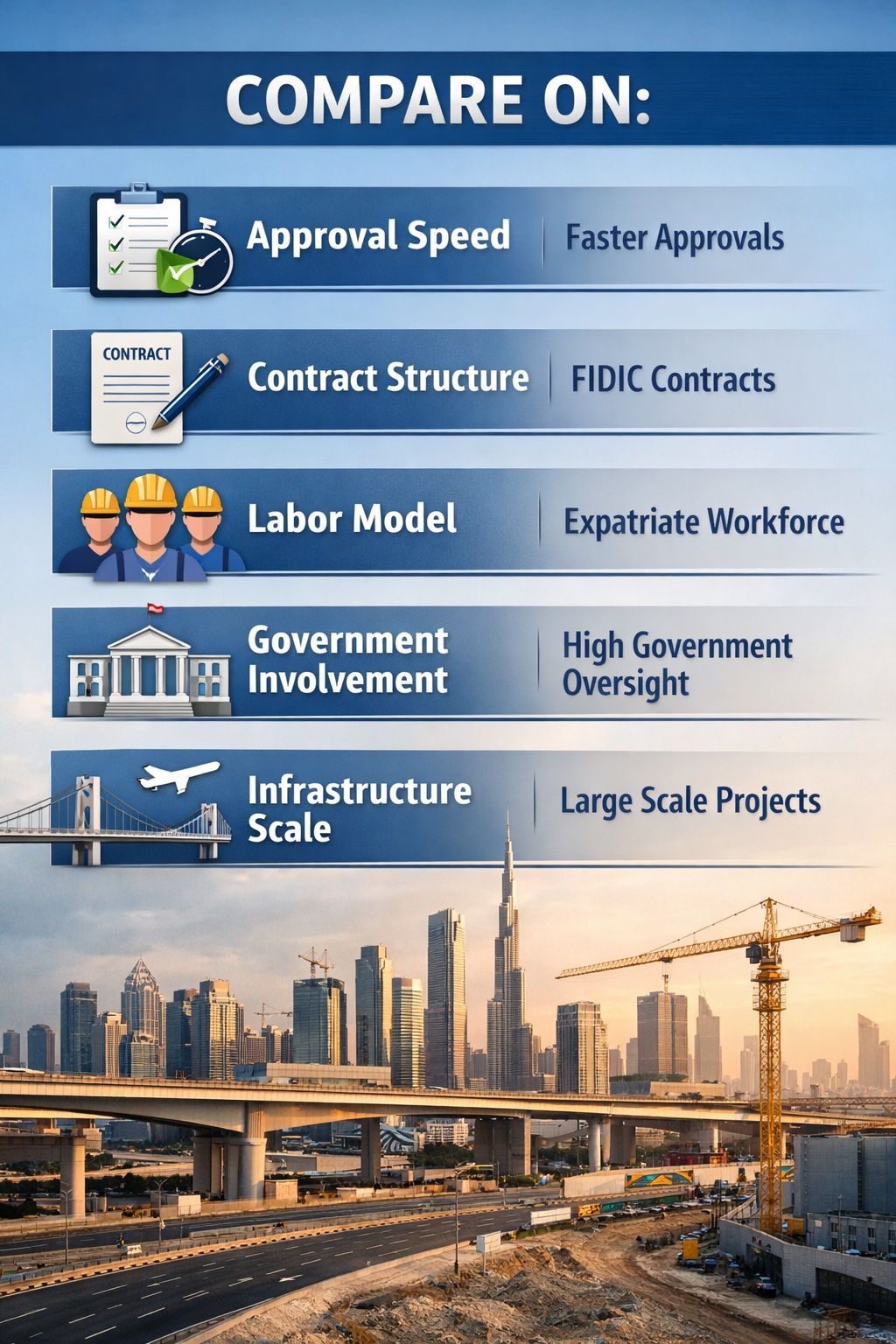
Compared to many Western markets, UAE construction operates faster, with centralized authority processes at emirate level and strong government backed infrastructure investment.
However, it also relies heavily on expatriate labor and imported materials. That creates sensitivity to global supply chains.
Payment cycles and contractual enforcement differ from Europe or North America. Local legal advice is recommended for large investments.
Speed is a competitive advantage. But speed without control creates risk.
What Trends Are Shaping Construction Services in UAE?
The main trends shaping construction services in UAE include digital project management, Building Information Modeling, modular construction, infrastructure expansion, and ESG focused development.
Building Information Modeling
Used widely for coordination, clash detection, and cost tracking.
Modular and Precast Construction
Reduces on site labor and shortens project timelines.
Infrastructure Expansion
Continued investment in logistics, transport, and utilities.
Smart Buildings
Integration of automation systems and data driven facility management.
Technology adoption is not a luxury here. It is becoming standard practice.
Frequently Asked Questions About Construction Services in UAE
Are foreign investors allowed to own construction projects in UAE?
Foreign investors can own property in designated freehold areas. Ownership rules vary by emirate and zone.
What is the typical timeline for a commercial building in UAE?
The timeline depends on size and approvals. Medium scale commercial projects may take over a year including authority clearance.
Are FIDIC contracts mandatory?
They are not mandatory, but widely used in government and large private projects due to structured risk allocation.
Do construction companies in UAE provide post construction maintenance?
Many firms offer facility management and maintenance services, especially for commercial and hospitality assets.
Is it better to use design and build or separate design and contractor contracts?
Design and build can reduce coordination gaps, but requires careful contractor selection to maintain quality and cost control.
Final Perspective
Construction services in UAE operate within a regulated, internationally aligned, and highly competitive environment that supports large scale development across multiple sectors.
If you plan to invest, treat construction as a structured process, not just a cost center.
Understand approvals. Choose contractors carefully. Build strong contracts. Monitor execution.
The UAE rewards disciplined developers who combine speed with control. That balance determines long term success in this market.

Is a leading construction company in the UAE, delivering 100% results-driven solutions across the Energy and Industrial sectors. We empower a rapidly growing UAE to reach new heights.
call us
Tel: +971-25656302
Mail Us
Quick Links