we are successfully executing projects in uae

Structural Steel Construction in UAE Guide
Structural steel construction in the UAE refers to the design, fabrication, and erection of steel frameworks used to build commercial towers, industrial facilities, infrastructure, and large architectural structures.
CONSTRUCTION IN UAE
Godha
2/25/20268 min read
Structural Steel Construction in UAE
Steel is widely used in the UAE because it allows fast construction, long spans, durability in harsh climates, and flexibility in modern architectural design.
Steel structures have become a backbone of the UAE’s rapid urban development. From Dubai skyscrapers to large logistics warehouses in Abu Dhabi, structural steel enables projects to be completed quickly while maintaining strength and design freedom.
Understanding how structural steel construction works in the UAE requires looking at engineering methods, local regulations, climate considerations, fabrication processes, and the industries driving demand.
What Is Structural Steel Construction
Structural steel construction is a building method that uses steel beams, columns, and trusses to create the load-bearing skeleton of a structure. The steel frame supports floors, walls, and roofs while distributing loads safely to the foundation.
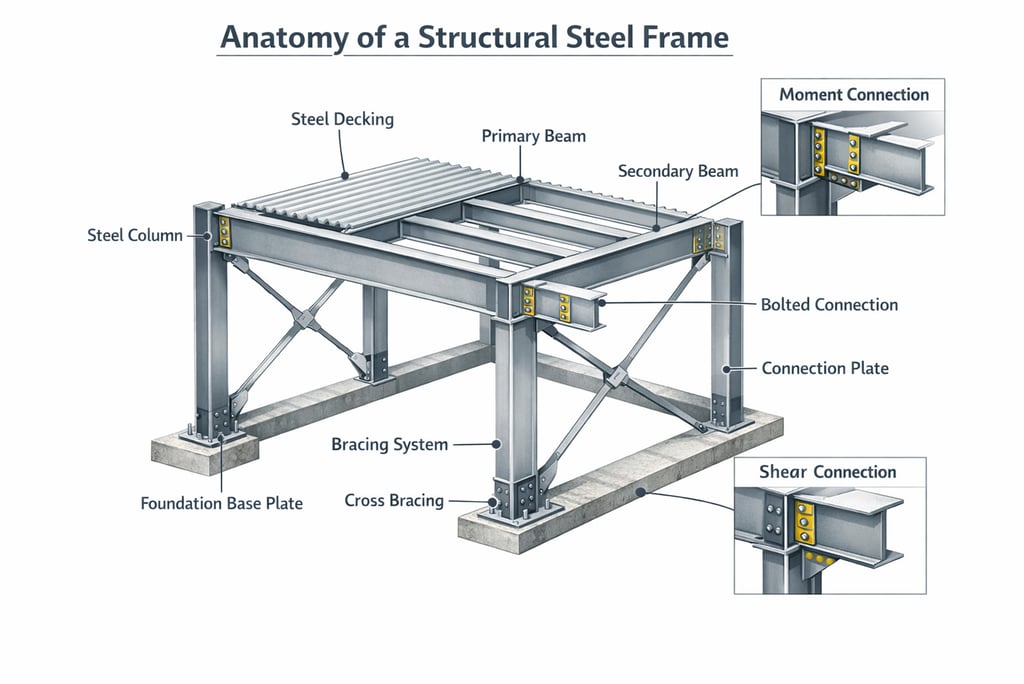
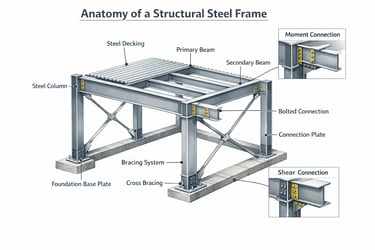
Structural steel acts as the primary structural system of many modern buildings. Instead of relying on load-bearing walls, engineers design a steel skeleton that carries vertical loads, wind loads, and seismic forces.
Steel structures typically consist of components such as:
Beams
Columns
Bracing systems
Trusses
Steel decking
Connection plates and bolts
Each element is fabricated in controlled factory environments before being transported to the construction site.
In the UAE, steel construction is widely used because projects often require large spans, fast completion schedules, and modern architectural forms.
For example:
Airport terminals
Shopping malls
Logistics warehouses
Stadiums
High-rise buildings
Oil and gas facilities
Steel structures allow engineers to design open spaces without excessive columns, which is essential in commercial and industrial developments.
Why Structural Steel Construction Is Popular in the UAE
Structural steel is widely used in the UAE because it enables faster construction, supports large architectural spans, resists harsh desert climates, and meets the demands of rapid infrastructure development.
The UAE construction market is unique. Cities like Dubai and Abu Dhabi regularly develop large commercial projects under tight timelines.
Steel construction fits this environment for several reasons.
Fast Construction Speed
Steel components are fabricated off-site in factories while foundation work happens simultaneously on site.
Once components arrive, erection is fast.
Large structures that would take months with reinforced concrete can be completed much faster using steel frameworks.
This speed is essential for:
Commercial projects
Industrial warehouses
Logistics centers
Airports
Expo developments
Long Span Capabilities
Steel beams and trusses allow engineers to design large open spaces.
This is critical for buildings such as:
Aircraft hangars
Convention centers
Exhibition halls
Shopping malls
Stadium roofs
Concrete structures often require additional columns, which reduce usable space.
Lightweight Structural System
Steel structures weigh significantly less than reinforced concrete systems.
This reduces foundation loads and can lower overall construction costs.
In high-rise construction, lighter structures also improve seismic performance and structural efficiency.
Adaptability for Future Expansion
Steel buildings can be modified or expanded more easily.
Additional floors, extensions, or interior modifications can often be completed without major structural changes.
This flexibility is valuable in the UAE where commercial spaces often evolve.
How Structural Steel Construction Works
Structural steel construction follows a process that includes engineering design, steel fabrication, surface treatment, transportation, and on-site erection. Each phase must meet structural standards and quality controls.
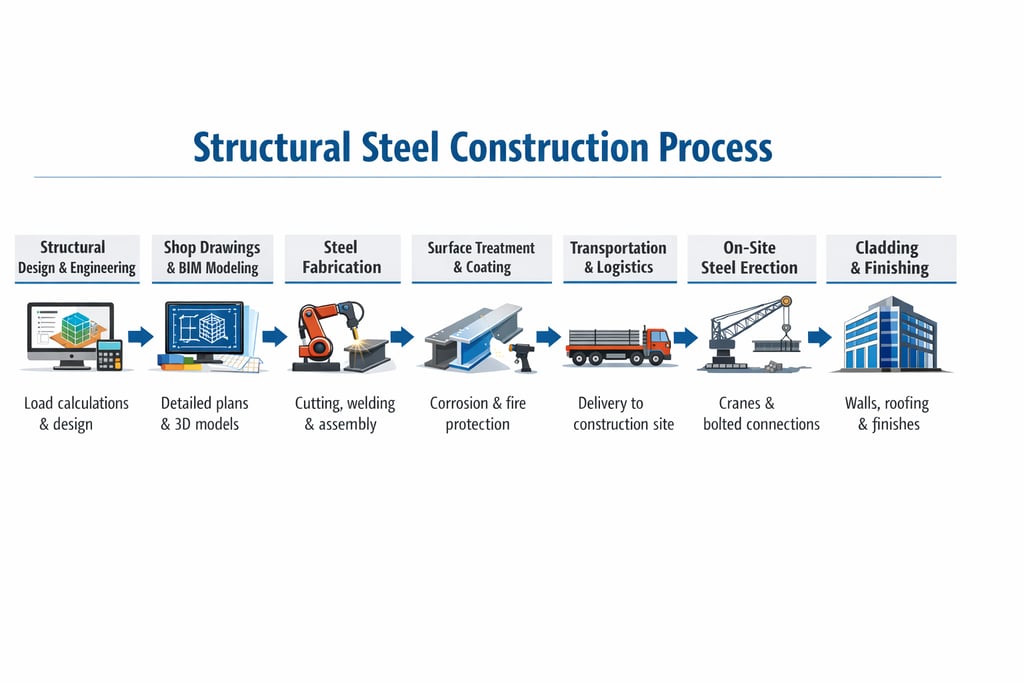
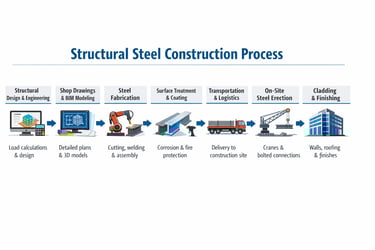
Steel construction projects typically follow five major phases.
1. Structural Design and Engineering
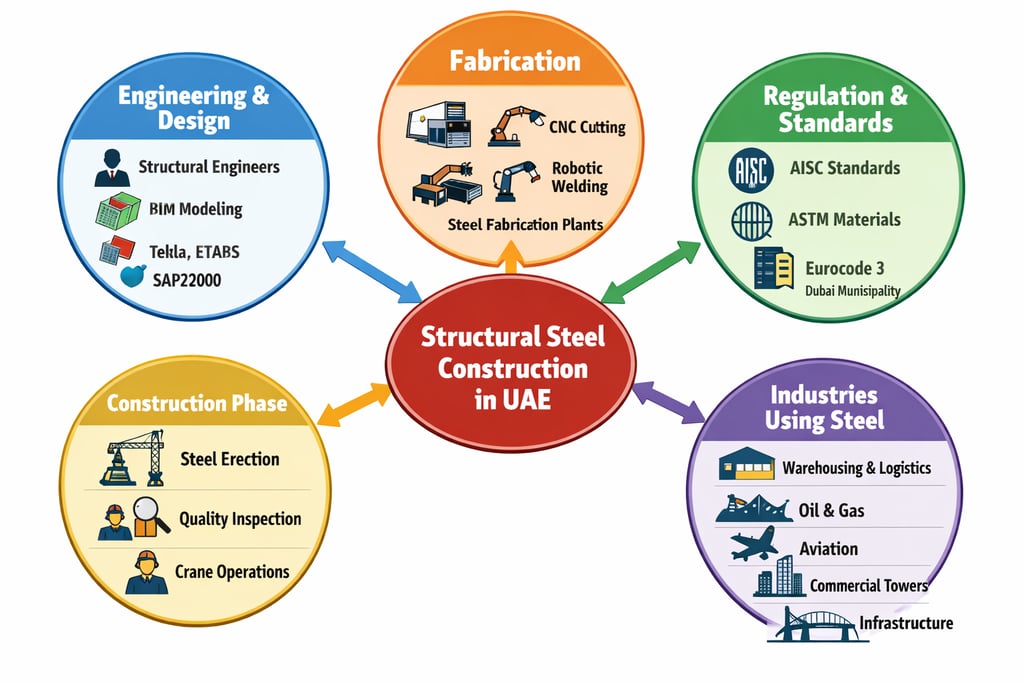
Structural engineers calculate loads and design the steel framework using software such as:
Tekla Structures
ETABS
SAP2000
STAAD Pro
The design must consider:
Dead loads
Live loads
Wind loads
Thermal expansion
Seismic forces
Local building regulations
Detailed shop drawings are then created for fabrication.
2. Steel Fabrication
Fabrication happens in specialized steel plants.
The process includes:
Cutting steel plates and sections
Drilling bolt holes
Welding structural connections
Assembly of trusses and frames
Fabricators often use CNC cutting machines, robotic welding systems, and automated drilling lines.
Precision during fabrication reduces site installation time.
3. Surface Treatment and Protection
Because steel can corrode, protective coatings are applied.
Common options include:
Hot dip galvanizing
Epoxy coatings
Fire resistant paint
Powder coating
In coastal UAE areas, corrosion protection is critical due to humidity and salt exposure.
4. Transportation and Logistics
Fabricated components are transported to the construction site using trucks and heavy trailers.
Large trusses or girders may require special permits and logistics planning.
Efficient transport scheduling prevents delays during erection.
5. Steel Erection on Site
Cranes lift steel components into position.
Workers connect members using:
High strength bolts
Welded connections
Temporary bracing stabilizes the structure until the full framework is complete.
Once the skeleton is erected, secondary systems such as decking, cladding, and roofing are installed.
What Types of Structural Steel Are Used in UAE Construction
Common structural steel types used in the UAE include I-beams, H-sections, hollow structural sections, steel plates, and built-up girders. The choice depends on load requirements, span lengths, and architectural design.
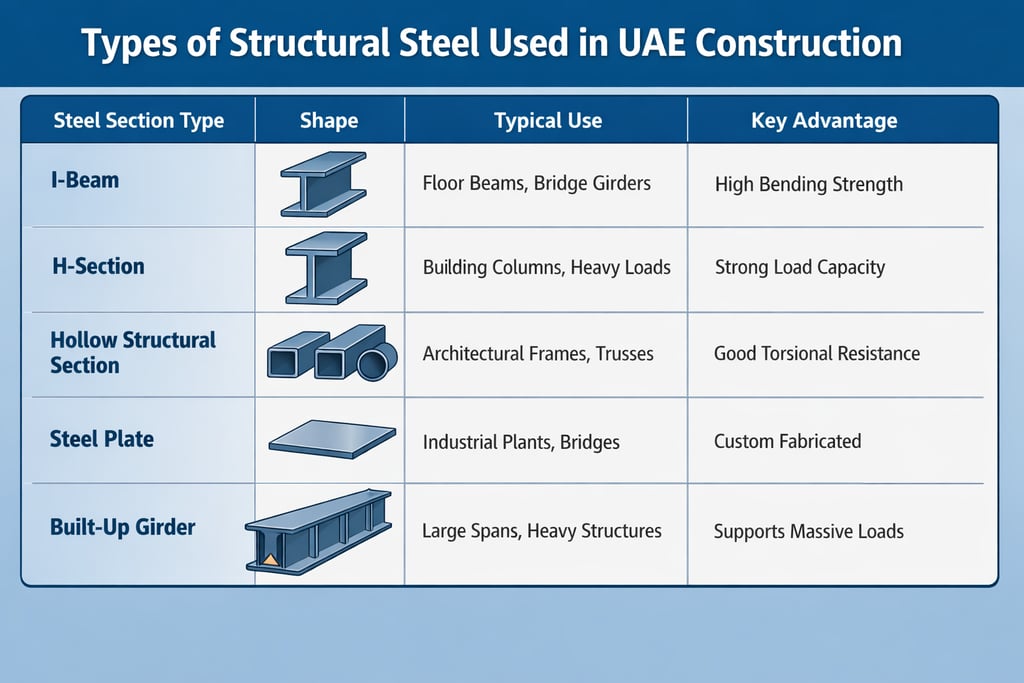
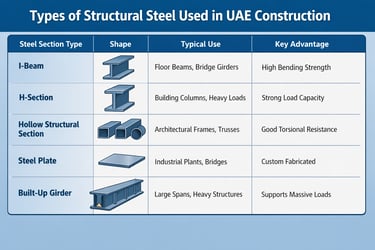
Different steel shapes serve different structural functions.
I Beams
I-beams are one of the most widely used structural elements.
They are efficient for bending loads and commonly used for:
Floor beams
Bridge girders
Structural frames
H Sections
H sections provide strong load carrying capacity.
They are frequently used for columns in high-rise buildings and industrial structures.
Hollow Structural Sections
These include:
Square tubes
Rectangular tubes
Circular pipes
They offer excellent torsional resistance and are popular in architectural designs.
Steel Plates and Built-Up Sections
Large structures may require custom fabricated girders created from welded steel plates.
These are common in:
Industrial plants
Power stations
Large infrastructure projects
Key Standards and Regulations for Structural Steel in the UAE
Structural steel construction in the UAE follows international standards such as AISC, BS EN, and ASTM along with local building regulations enforced by municipal authorities.
Construction projects in the UAE must comply with both international engineering codes and local regulatory frameworks.
Common standards include:
AISC Steel Construction Manual
ASTM material specifications
British Standards BS EN 1993 (Eurocode 3)
ISO welding and fabrication standards
Municipal authorities such as:
Dubai Municipality
Abu Dhabi Department of Municipalities
Sharjah Municipality
review structural drawings before construction begins.
Many large projects also require third-party inspection and structural certification.
For industry guidelines, the American Institute of Steel Construction provides extensive standards.
What Industries Use Structural Steel Construction in the UAE
Structural steel is widely used across commercial, industrial, infrastructure, oil and gas, aviation, and logistics sectors in the UAE.
Large structural steel projects in the UAE are often delivered through EPC construction companies (Engineering, Procurement, and Construction). In this model, a single contractor manages the full project lifecycle.
This includes structural design coordination, steel procurement, fabrication supervision, and on-site erection. EPC contractors are common in industrial facilities, logistics hubs, power plants, and large infrastructure developments where steel structures must integrate with mechanical, electrical, and civil systems.
The UAE economy relies heavily on infrastructure development.
Steel structures support many key sectors.
Commercial Real Estate
High-rise buildings and office towers often combine steel and reinforced concrete systems.
Steel is used for:
Podium structures
Roof frameworks
Long span floors
Architectural features
Logistics and Warehousing
Dubai has become a global logistics hub.
Steel warehouses allow large column free spaces ideal for:
distribution centers
storage facilities
cold storage buildings
Oil and Gas Facilities
Industrial steel structures support:
pipe racks
offshore platforms
refinery units
process plants
These structures must meet strict safety and corrosion protection requirements.
Aviation and Infrastructure
Steel is widely used in:
airport terminals
aircraft hangars
metro stations
bridges
Dubai International Airport and Al Maktoum Airport rely heavily on steel frameworks for long span roof systems.
Benefits of Structural Steel Construction
Structural steel offers high strength, fast construction speed, design flexibility, durability, and recyclability. These advantages make it one of the most efficient materials for modern construction.
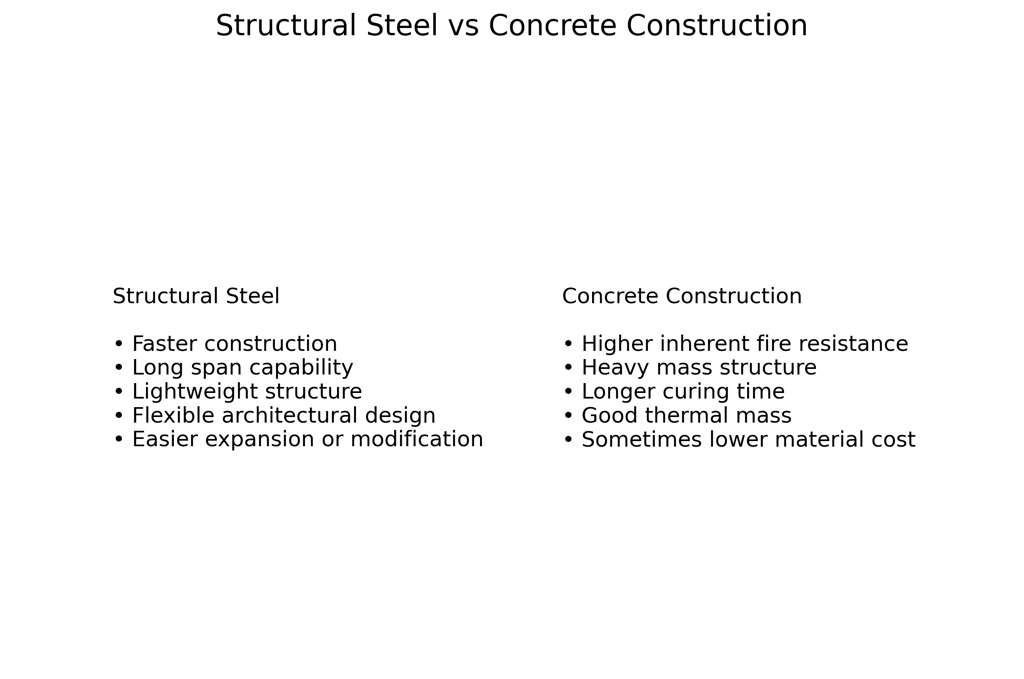
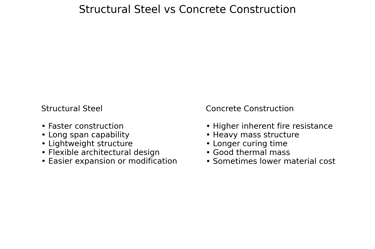
Steel provides several structural advantages over other building materials.
High Strength to Weight Ratio
Steel carries heavy loads without excessive material thickness.
This allows thinner structural members while maintaining strength.
Design Flexibility
Architects prefer steel because it supports complex designs such as curved roofs and large cantilevers.
Many iconic UAE buildings rely on steel frameworks for their distinctive shapes.
Durability
When properly protected with coatings, steel structures can last for decades with minimal maintenance.
Sustainability
Steel is one of the most recyclable construction materials.
Most structural steel contains recycled content and can be reused at the end of a building’s life.
Challenges of Structural Steel Construction in the UAE
While steel offers many advantages, projects must address corrosion risks, fire protection requirements, fabrication quality control, and supply chain management.
Understanding these challenges helps engineers and contractors avoid costly mistakes.
Corrosion in Coastal Environments
Cities like Dubai and Abu Dhabi are close to the sea.
Salt in the air accelerates steel corrosion.
Protective coatings and regular inspections are essential.
Fire Protection
Steel loses strength at high temperatures.
Buildings often require fireproofing systems such as:
intumescent paint
fire resistant boards
spray applied coatings
Fabrication Quality
Poor welding or inaccurate fabrication can compromise structural performance.
Reputable fabrication companies follow strict inspection procedures including:
ultrasonic testing
magnetic particle inspection
weld quality certification
Supply Chain Complexity
Large steel projects involve international suppliers, fabrication yards, and shipping logistics.
Delays in fabrication or transport can disrupt project timelines.
Common Mistakes in Structural Steel Projects
Common mistakes include poor coordination between design and fabrication, underestimating corrosion protection, ignoring erection planning, and inadequate inspection procedures.
These issues often lead to delays or structural risks.
Incomplete Shop Drawings
Fabricators rely on precise drawings.
Missing connection details can create costly revisions during fabrication.
Ignoring Erection Strategy
Some projects focus heavily on design but neglect erection planning.
Large structures must consider crane access, lifting sequences, and temporary bracing.
Underestimating Protective Coatings
Steel exposed to harsh environments requires high quality coating systems.
Using cheaper coatings can lead to rapid corrosion.
Weak Quality Control
Professional steel projects include third-party inspection to verify welding quality and structural alignment.
Skipping inspections increases long term risk.
How to Choose a Structural Steel Contractor in the UAE
Choosing a structural steel contractor requires evaluating fabrication capacity, engineering expertise, certifications, project portfolio, and quality assurance procedures.
A reliable steel contractor plays a major role in project success.
When evaluating contractors, consider several factors.
Engineering Capability
Some contractors only fabricate steel.
The best companies also provide structural design support and detailing services.
Fabrication Facilities
Large fabrication yards with CNC equipment produce higher precision components.
Visit the fabrication facility if possible.
Certifications and Standards
Look for companies that follow standards such as:
ISO 9001 quality management
ISO 3834 welding quality
AWS welding certifications
Past Projects
Review completed projects in similar sectors such as warehouses, airports, or industrial plants.
Experience with complex structures often indicates strong technical capability.
Prime Star Engg is one example of a structural steel company operating in the UAE that combines engineering expertise, fabrication capability, and certified quality standards. With experience in structural steel fabrication, industrial structures, and large scale construction support, the company reflects the type of contractor many developers look for when selecting a reliable steel partner for complex projects.
Future Trends in Structural Steel Construction
Structural steel construction is evolving with digital modeling, modular construction, advanced coatings, and automated fabrication technologies.
Several trends are shaping the future of steel construction in the UAE.
Building Information Modeling (BIM)
BIM software integrates structural design, fabrication, and construction planning into a single digital model.
Tools like Tekla Structures allow engineers to simulate fabrication and erection before construction begins.
Modular Construction
Large steel modules can be fabricated off-site and assembled on site.
This approach improves speed and reduces labor requirements.
Smart Coating Technologies
New corrosion protection systems extend steel life in harsh environments.
Advanced coatings provide better resistance against humidity and chemical exposure.
Automated Fabrication
Robotic welding and CNC machining improve fabrication accuracy and productivity.
Automation also reduces human error in complex steel assemblies.
Frequently Asked Questions
What is structural steel construction used for in the UAE
Structural steel is used for commercial buildings, warehouses, industrial plants, airports, bridges, and large architectural structures. Its strength and speed of construction make it ideal for large scale projects.
Is structural steel better than concrete for construction
Both materials have advantages. Steel offers faster construction and longer spans, while concrete provides mass and fire resistance. Many modern buildings combine both materials for optimal performance.
How long do steel structures last
With proper coatings and maintenance, structural steel buildings can last 50 to 100 years or more. Regular inspections and corrosion protection are key to long service life.
What is the cost of structural steel construction in the UAE
Costs depend on steel prices, project size, design complexity, fabrication requirements, and transportation. Industrial warehouses typically have lower cost per square meter compared to complex commercial structures.
Are steel buildings safe in extreme weather
Yes. Structural steel buildings are designed to resist wind loads, seismic forces, and environmental stresses. Engineers calculate loads according to international standards to ensure safety.
Structural steel construction continues to shape the UAE’s modern skyline and industrial infrastructure. Its combination of strength, speed, and flexibility allows engineers and architects to deliver ambitious projects while maintaining structural reliability. As technology improves fabrication and design processes, steel will remain one of the most important materials in the region’s construction industry.
About The Author
Mubashir Shakoor Godha
Mubashir Shakoor Godha is a blogger, digital marketer, and SEO specialist based in Pakistan. He started his journey in 2019 on Blogger.com and has since built and managed multiple websites that rank on Google and AI driven search platforms.
He is also the Founder of MSGDigitals, Top Rated Digital Marketing Agency in Pakistan, where he helps businesses grow through SEO, content strategy, and performance marketing.

Is a leading construction company in the UAE, delivering 100% results-driven solutions across the Energy and Industrial sectors. We empower a rapidly growing UAE to reach new heights.
call us
Tel: +971-25656302
Mail Us
Quick Links