we are successfully executing projects in uae

UAE Sustainable & Green Building Hub for Net Zero Construction
Design and deliver high performance buildings using net zero strategies, certified materials, and energy efficient systems aligned with UAE regulations and climate goals.
Most buildings today are expected to do more than provide space. They must reduce emissions, use resources wisely, and stay compliant with evolving regulations.
If you are planning a project in the UAE or anywhere with similar climate demands, you need a clear path.
What a UAE Sustainable Building Hub Actually Does
A sustainable building hub combines design guidance, material selection, energy systems, and compliance support into one coordinated framework. It helps developers, architects, and buyers create buildings that meet net zero and green standards efficiently.
Think of it as a central system rather than a single service. Instead of treating sustainability as an add on, the hub integrates it from the first concept to final construction.
It connects four key areas:
Net zero design strategies
Sustainable material sourcing
Energy efficient systems
Regulatory compliance and certification
In the UAE, this matters even more due to extreme climate conditions and strict building regulations. A coordinated approach reduces delays, prevents costly redesigns, and improves long term building performance.
Why Sustainable Construction Matters in the UAE
Sustainable construction in the UAE addresses high energy demand, water scarcity, and carbon reduction goals. It supports national initiatives like UAE Net Zero 2050 while lowering operating costs and improving building resilience in extreme climates.
The UAE faces unique environmental challenges. Cooling demand is high, water resources are limited, and urban growth is rapid.
This makes sustainability not just a trend but a requirement.
Key drivers include:
UAE Net Zero by 2050 strategy
Dubai Clean Energy Strategy
Estidama Pearl Rating System in Abu Dhabi
Dubai Green Building Regulations
For developers and investors, this translates into:
Lower lifecycle costs
Higher asset value
Better tenant demand
Regulatory compliance
Sustainable buildings are no longer optional. They are becoming the baseline for competitive and future ready development.
Net Zero Building Strategy Explained
Net zero buildings produce as much energy as they consume annually through efficient design, renewable energy, and smart systems. The focus is on reducing demand first, then offsetting remaining energy with clean sources.
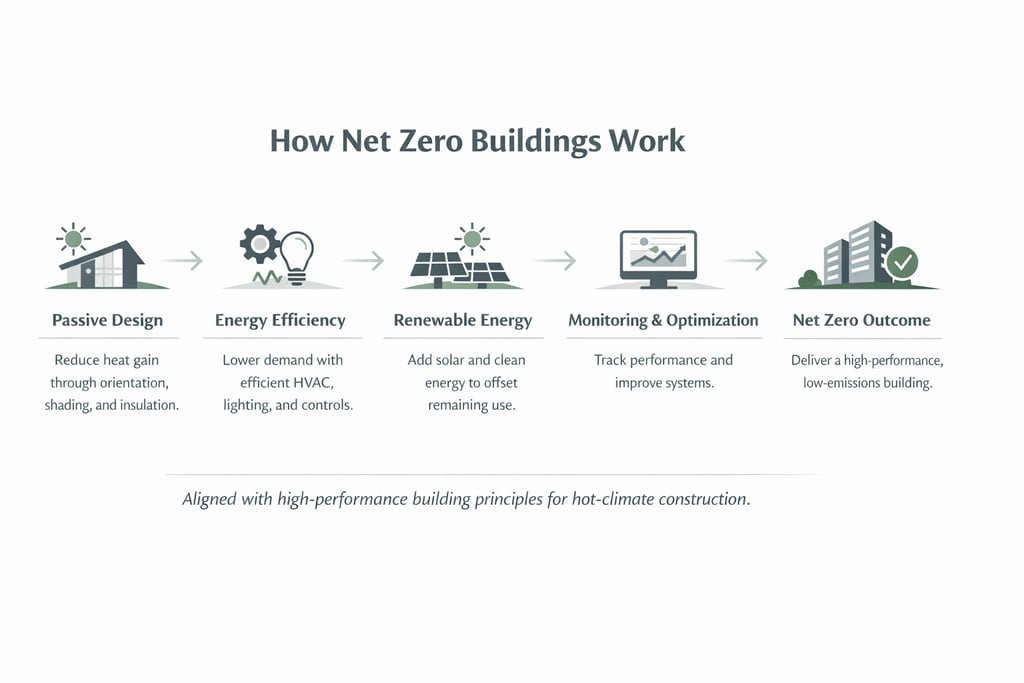
Achieving net zero is not about adding solar panels at the end. It starts with reducing energy demand at every stage.
A typical approach includes:
1. Passive Design
Orientation to reduce heat gain
Shading systems
High performance insulation
2. Efficient Systems
HVAC optimized for desert climates
Smart lighting and controls
High efficiency appliances
3. Renewable Energy
Solar photovoltaic systems
On site or off site clean energy integration
4. Monitoring and Optimization
Building management systems
Real time energy tracking
This layered strategy ensures that energy generation does not have to compensate for inefficient design.
Sustainable Materials for UAE Construction
Sustainable materials reduce environmental impact through low embodied carbon, durability, and efficient sourcing. In the UAE, materials must also withstand heat, humidity, and sand exposure while meeting green certification standards.
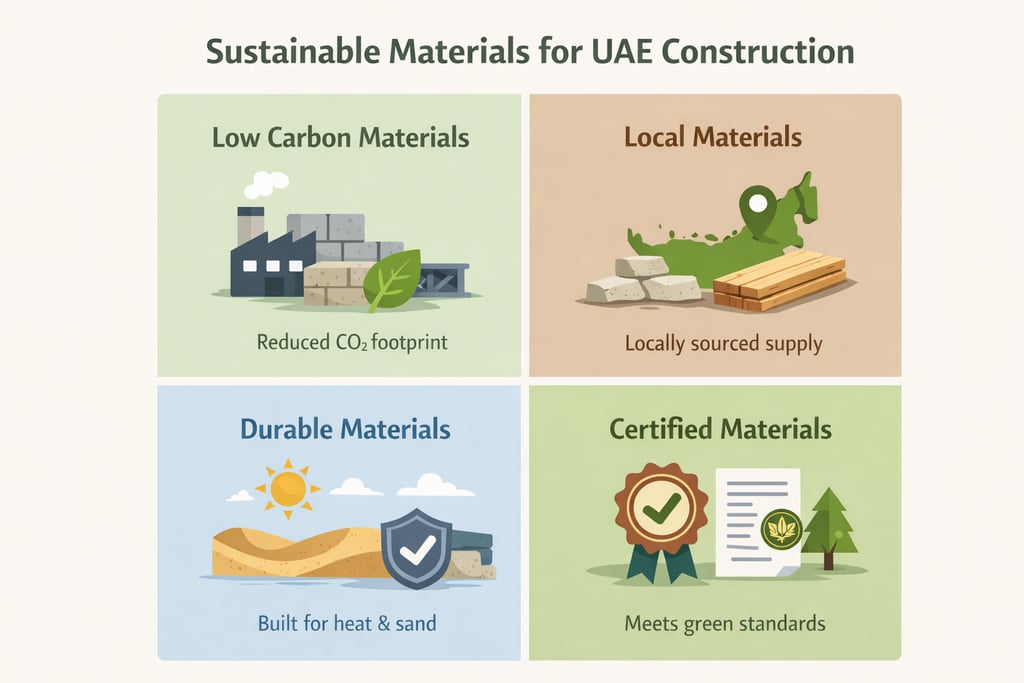
Material choice directly affects both environmental impact and building performance.
Key categories include:
Low Carbon Materials
Recycled steel
Fly ash concrete
Low carbon cement alternatives
Locally Sourced Materials
Reduce transport emissions
Improve supply chain reliability
High Durability Materials
Resistant to UV exposure
Designed for thermal stress
Certified Materials
FSC certified wood
EPD verified products
LEED compliant materials
Choosing the right materials early helps avoid redesign and ensures smoother certification processes.
Energy Efficient Systems for High Performance Buildings
Energy efficient systems reduce power consumption through optimized HVAC, lighting, and automation. In the UAE, cooling efficiency and smart control systems are critical for achieving meaningful energy savings.
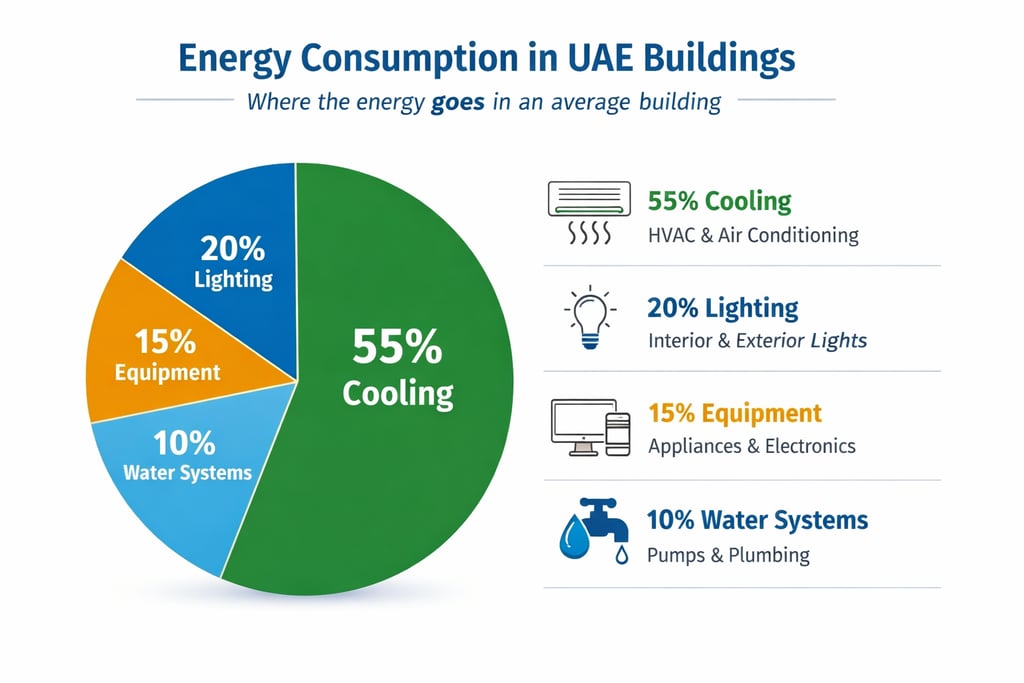
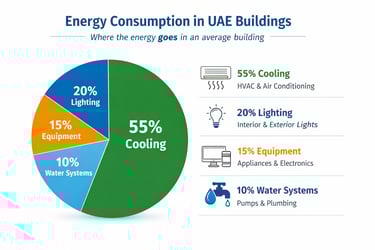
Energy systems account for a large portion of building consumption, especially cooling.
Key systems include:
Advanced HVAC Systems
Variable refrigerant flow systems
High efficiency chillers
Demand controlled ventilation
Smart Lighting
LED systems
Motion sensors
Daylight integration
Building Automation
Centralized control systems
AI driven optimization
Occupancy based adjustments
Water Efficiency Systems
Greywater reuse
Low flow fixtures
Smart irrigation
When integrated properly, these systems can reduce operational costs significantly while improving comfort.
Compliance with UAE Green Building Regulations
Green building compliance in the UAE involves meeting standards such as Estidama, Dubai Green Building Regulations, and international certifications like LEED. Compliance ensures legal approval and improves building credibility.
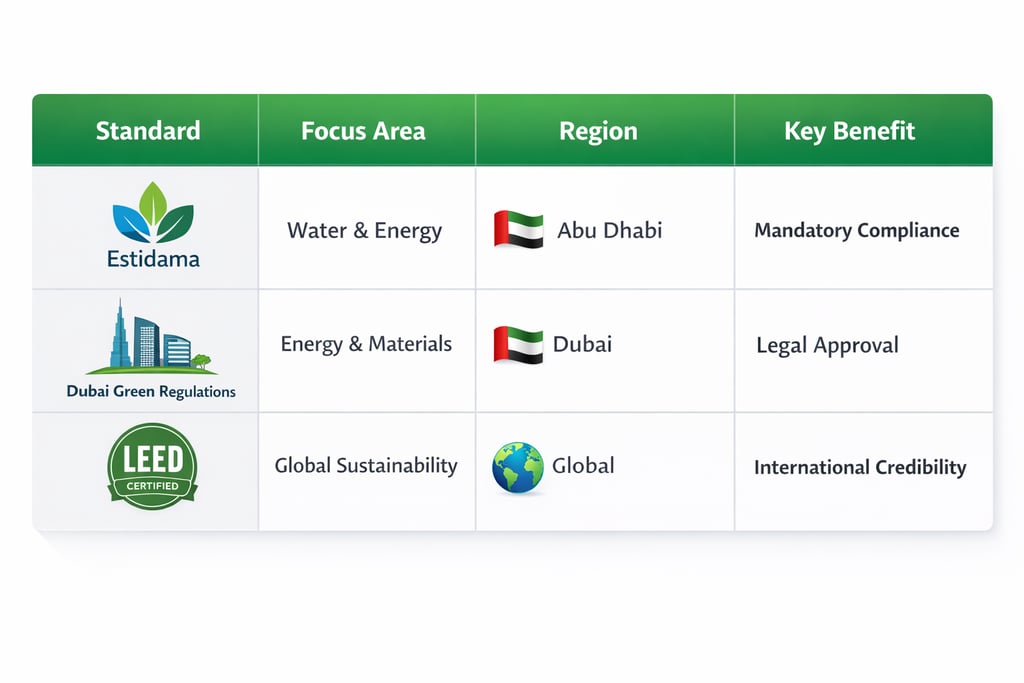
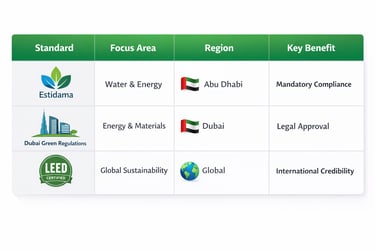
Each emirate has its own framework, but the goal is consistent: reduce environmental impact.
Key Standards
Estidama Pearl Rating System (Abu Dhabi)
Dubai Green Building Regulations
LEED certification (global standard)
What Compliance Involves
Energy modeling
Material documentation
Water efficiency planning
Indoor environmental quality
Working within a structured hub ensures that compliance is built into the project from the start, rather than addressed later under pressure.
Benefits for Developers, Buyers, and Investors
Sustainable buildings offer lower operating costs, higher market value, regulatory compliance, and improved occupant comfort. They also reduce long term risk and align with global sustainability expectations.
Different stakeholders gain different advantages.
For Developers
Faster approvals
Competitive positioning
Higher project value
For Buyers
Lower utility bills
Healthier indoor environments
Future proof investment
For Investors
Strong ESG alignment
Reduced regulatory risk
Long term asset stability
Sustainability is not just an environmental decision. It is a financial one.
Step by Step Sustainable Building Process
A structured process ensures sustainability is integrated from planning to operation. It includes strategy, design, material selection, system integration, and performance monitoring.
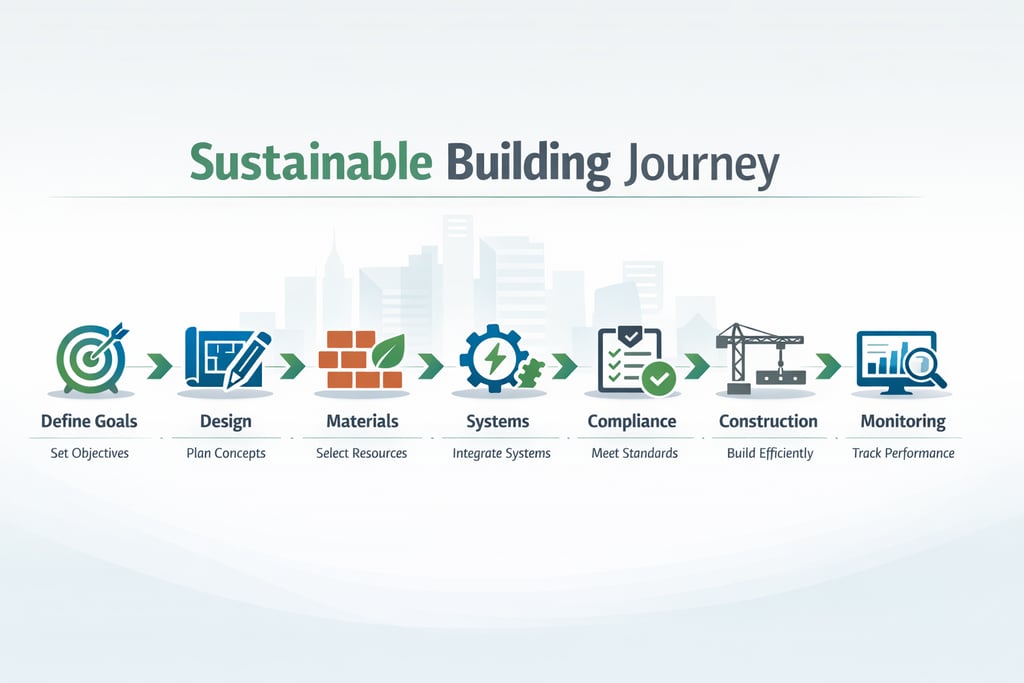
A typical workflow looks like this:
Step 1: Define Sustainability Goals
Set targets such as net zero, LEED level, or energy reduction percentage.
Step 2: Concept Design
Integrate passive design and orientation early.
Step 3: Material Selection
Choose low carbon and certified materials.
Step 4: System Design
Plan HVAC, lighting, and energy systems.
Step 5: Compliance Planning
Align with UAE regulations and certification requirements.
Step 6: Construction
Ensure correct implementation and documentation.
Step 7: Monitoring
Track performance and optimize systems.
Following a clear process reduces risk and improves outcomes.
Common Challenges and How to Solve Them
Challenges include higher upfront costs, complex regulations, and lack of expertise. These can be managed through integrated planning, expert guidance, and lifecycle cost analysis.
Many projects face similar obstacles.
Challenge: Higher Initial Costs
Solution: Focus on lifecycle savings and operational cost reductions.
Challenge: Regulatory Complexity
Solution: Work with specialists familiar with UAE standards.
Challenge: Fragmented Teams
Solution: Use an integrated hub approach to align stakeholders.
Challenge: Performance Gaps
Solution: Implement monitoring and smart systems.
Most challenges come from late planning. Early integration solves most issues.
How to Choose the Right Sustainable Building Partner
Choose partners with proven experience in UAE regulations, net zero design, and certified projects. Look for transparent processes, measurable results, and clear communication.
Not all providers offer the same level of expertise.
Key criteria:
Experience with Estidama or LEED projects
Ability to handle full lifecycle, not just design
Clear documentation and reporting
Understanding of local climate challenges
You should also look for partners who explain decisions clearly. If something feels unclear, it often leads to problems later.
Frequently Asked Questions
What is a net zero building in simple terms?
A net zero building produces as much energy as it uses over a year. It reduces energy demand through design and efficiency, then offsets remaining consumption with renewable energy sources like solar power.
Are sustainable buildings more expensive to build?
Initial costs can be higher, but operational savings often outweigh them. Lower energy bills, reduced maintenance, and higher property value make sustainable buildings financially beneficial over time.
Which certifications are important in the UAE?
Key certifications include Estidama in Abu Dhabi, Dubai Green Building Regulations, and LEED. Each focuses on energy efficiency, water use, materials, and indoor environmental quality.
How long does it take to achieve compliance?
It depends on project size and complexity. With proper planning from the beginning, compliance can be integrated into the normal design and construction timeline without major delays.
Can existing buildings become sustainable?
Yes, through retrofitting. Upgrading HVAC systems, improving insulation, and adding smart controls can significantly improve performance and reduce energy consumption.
What is the biggest factor in energy savings?
Cooling efficiency is the largest factor in the UAE. Optimizing HVAC systems and reducing heat gain through design can dramatically lower energy use.
Building sustainably does not have to be complicated. With the right approach, you can reduce costs, meet regulations, and create long lasting value.
Get expert guidance tailored to your project, your goals, and UAE requirements.
Clear steps, practical solutions, and support you can rely on.
Is a leading construction company in the UAE, delivering 100% results-driven solutions across the Energy and Industrial sectors. We empower a rapidly growing UAE to reach new heights.
call us
Tel: +971-25656302
Mail Us
Quick Links

Contact Us
Powered by MSGDigitals.com