we are successfully executing projects in uae

Construction Process Step by Step UAE
The construction process in the UAE follows defined stages including planning, design approval, permitting, procurement, construction, inspection, and handover, ensuring compliance with local regulations, safety standards, and quality benchmarks for residential, commercial, infrastructure projects.
CONSTRUCTION IN UAE
3/22/20266 min read
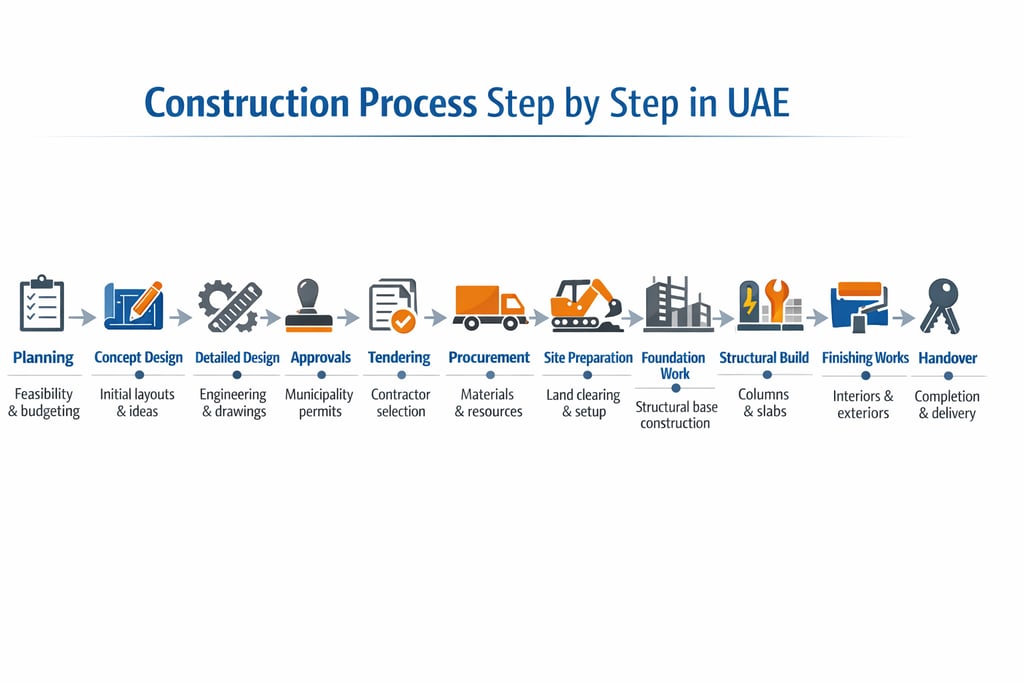
Construction Process Step by Step UAE Explained Clearly
If you’ve ever passed a construction site in Dubai or Abu Dhabi, you’ve probably wondered how these massive projects move from sand to skyline so efficiently.
The answer lies in a structured, regulated process. Once you understand each step, everything starts to make sense, whether you are a beginner, investor, or professional working in construction.
Let’s break it down in a way that’s practical, clear, and actually useful.
What is the construction process in the UAE?
The construction process in the UAE is a regulated sequence of steps that includes project planning, design, approvals, procurement, construction, and final handover, all aligned with municipal laws and safety standards.
Unlike many countries, the UAE construction sector operates under strict government oversight. Authorities such as the Dubai Municipality and Abu Dhabi Department of Municipalities and Transport play a central role in approvals and inspections.
This structured system ensures that projects meet environmental, safety, and engineering standards. It also reduces risks for investors and developers.
If you're involved in any way, understanding this process helps you avoid delays, penalties, and costly redesigns.
While understanding each stage is important, it becomes even more useful when you connect it with real-world execution.
In practice, these steps are delivered through integrated Construction Services in UAE, where consultants, contractors, and project managers handle planning, approvals, execution, and quality control as a unified process.
This service-driven approach helps reduce delays, ensures compliance with local regulations, and keeps projects aligned with both budget and timeline expectations.
Why is the UAE construction process unique?
The UAE construction process is unique due to strict regulatory approvals, fast-track development timelines, advanced technologies, and strong emphasis on sustainability and safety.
In many countries, construction delays are common due to unclear processes. In the UAE, the opposite is true.
Authorities have digitized approvals, introduced smart permitting systems, and enforced building codes such as the UAE Fire and Life Safety Code.
There’s also a growing focus on green buildings. For example, Dubai mandates sustainability through regulations like Al Sa’fat.
For you, this means faster execution, but only if you follow the process correctly.
Step 1 Project Planning and Feasibility
Project planning involves defining the scope, budget, timeline, and feasibility of the construction project, ensuring it aligns with market demand and regulatory requirements.
Everything starts here. Before any drawings or permits, you need a clear understanding of what you are building and why.
This stage includes:
Market Feasibility
You assess demand. Is there a need for residential units, offices, or retail space?
Financial Planning
Budget estimation includes land cost, construction cost, approvals, and contingencies.
Site Selection
Location affects zoning regulations, utilities, and approvals.
Risk Assessment
You evaluate environmental risks, legal constraints, and economic factors.
Skipping proper planning is one of the biggest reasons projects fail or get delayed.
Step 2 Concept Design and Architectural Planning
Concept design transforms the project idea into initial architectural drawings, layouts, and structural concepts that define the building’s functionality and appearance.
This is where your idea becomes visual.
Architects create:
Floor plans
Elevations
3D visualizations
Basic structural layouts
At this stage, creativity meets practicality. The design must comply with UAE zoning laws, height restrictions, and land use regulations.
You also start coordinating with engineers to ensure structural feasibility.
Step 3 Detailed Design and Engineering
Detailed design involves preparing technical drawings, structural calculations, MEP systems, and specifications required for approvals and construction execution.
Now things get technical.
You’ll develop:
Structural Design
Ensures the building can withstand loads and environmental conditions.
MEP Design
Mechanical, Electrical, and Plumbing systems are integrated.
Material Specifications
Defines what materials will be used and their standards.
BIM Modeling
Many UAE projects use Building Information Modeling for coordination.
At this stage, accuracy is critical. Errors here can cost millions later.
Step 4 Authority Approvals and Permits
Construction approvals in the UAE involve submitting designs to authorities for compliance checks and obtaining permits before starting any physical work on-site.
This is one of the most important stages.
You will deal with multiple authorities depending on your project:
Dubai Municipality
Civil Defense
DEWA (Dubai Electricity and Water Authority)
Environmental agencies
Each authority reviews specific aspects like:
Fire safety
Utilities
Structural safety
Environmental impact
You cannot legally start construction without these approvals.
Step 5 Tendering and Contractor Selection
Tendering is the process of inviting contractors to bid for the project, evaluating proposals, and selecting the most suitable contractor based on cost, experience, and capability.
Once approvals are in place, you move to contractor selection.
Tender Documents Include:
Drawings
Specifications
Bill of quantities
Evaluation Criteria:
Price
Experience
Timeline
Technical capability
Choosing the cheapest contractor is often a mistake. You need balance between cost and quality.
Step 6 Procurement of Materials and Resources
Procurement involves sourcing construction materials, equipment, and labor required to execute the project according to specifications and timelines.
This step ensures everything needed is available before construction begins.
Materials Procurement
Steel, concrete, glass, and finishing materials.
Equipment Planning
Cranes, machinery, and tools.
Labor Management
Skilled and unskilled workforce.
In the UAE, supply chains are strong, but delays can still happen if procurement is poorly planned.
Step 7 Site Preparation and Mobilization
Site preparation includes clearing land, setting up temporary facilities, and preparing the site for construction activities.
Before actual construction starts, the site must be ready.
Activities Include:
Land clearing
Excavation
Boundary marking
Temporary utilities setup
This stage also includes safety setup, which is strictly enforced in the UAE.
Step 8 Foundation and Structural Construction
This stage involves building the foundation and structural framework, forming the core of the building that supports all loads.
Now the real construction begins.
Foundation Work
Depends on soil type and building load.
Structural Framework
Includes columns, beams, and slabs.
High-rise buildings in the UAE often use advanced techniques and materials to ensure durability in harsh weather conditions.
Step 9 MEP Installation and Infrastructure
MEP installation integrates mechanical, electrical, and plumbing systems into the building, ensuring functionality and compliance with safety standards.
This is where the building starts to function.
Mechanical Systems
HVAC and ventilation.
Electrical Systems
Power distribution, lighting, and backup systems.
Plumbing Systems
Water supply and drainage.
Coordination is critical. Poor integration can lead to long-term operational issues.
Step 10 Finishing and Interior Works
Finishing includes interior and exterior works such as flooring, painting, fixtures, and landscaping that define the final look and usability of the building.
This is where the project comes to life.
Interior Works
Tiles, ceilings, lighting, and fittings.
Exterior Works
Façade, landscaping, and parking areas.
Quality control is essential here because this is what end users notice the most.
Step 11 Inspection and Quality Assurance
Inspection ensures that construction meets approved designs, safety regulations, and quality standards before project completion.
Authorities conduct inspections at multiple stages.
Types of Inspections:
Structural inspections
Fire safety inspections
Utility inspections
Only after passing these checks can you move to the final stage.
Step 12 Project Handover and Completion
Handover is the final stage where the completed project is delivered to the owner after obtaining completion certificates and approvals.
This stage includes:
Completion Certificate
Issued by authorities after final inspection.
Snagging Process
Identifying and fixing minor defects.
Documentation Handover
Includes drawings, manuals, and warranties.
Once completed, the building is ready for occupancy or operation.
While understanding each stage of construction is essential, many developers and property owners prefer a more streamlined approach through Turnkey Construction Services UAE.
In this model, a single contractor manages everything from design and approvals to execution and final handover. It reduces coordination gaps between stakeholders and helps maintain consistency in quality and timelines.
For you, this means less involvement in day-to-day decisions while still achieving a fully completed project that aligns with UAE regulations and standards.
Key Challenges in the UAE Construction Process
Common challenges include regulatory complexity, cost management, coordination issues, and maintaining quality within tight timelines.
Even with a structured system, challenges still exist.
Regulatory Complexity
Multiple approvals can slow progress if not managed well.
Cost Fluctuations
Material prices can change, affecting budgets.
Coordination Issues
Multiple stakeholders increase complexity.
Tight Deadlines
Fast-paced development can compromise planning if rushed.
Understanding these challenges helps you prepare better.
How to Successfully Manage a Construction Project in the UAE
Successful project management requires strong planning, regulatory understanding, stakeholder coordination, and strict quality control throughout the construction lifecycle.
If you want your project to succeed, focus on:
Clear Planning
Define scope, budget, and timeline early.
Hiring Experts
Work with experienced consultants and contractors.
Regulatory Compliance
Stay aligned with authority requirements.
Continuous Monitoring
Track progress and resolve issues quickly.
A proactive approach always performs better than reactive problem-solving.
Future Trends in UAE Construction
The future of UAE construction focuses on sustainability, smart technologies, modular construction, and digital transformation.
The industry is evolving rapidly.
Green Buildings
More projects are following sustainability standards.
Smart Construction
IoT and AI are improving efficiency.
Modular Construction
Faster and cost-effective building methods.
Digital Permits
Government systems are becoming more automated.
These trends will shape how construction projects are executed in the coming years.
Frequently Asked Questions
How long does the construction process take in the UAE?
The timeline varies depending on project size and complexity. Small residential projects may take 6 to 12 months, while large commercial or high-rise developments can take several years.
What approvals are required before construction in the UAE?
You need approvals from local municipalities, Civil Defense, and utility authorities. Each approval ensures compliance with safety, environmental, and structural standards before construction begins.
Can foreigners invest in construction projects in the UAE?
Yes, foreigners can invest in designated freehold areas. However, they must follow legal procedures, ownership regulations, and approval processes set by local authorities.
What is the role of consultants in construction projects?
Consultants handle design, approvals, supervision, and quality control. They ensure the project meets regulatory standards and is executed according to approved plans.
How important is sustainability in UAE construction?
Sustainability is becoming mandatory in many emirates. Regulations encourage energy-efficient buildings, reduced environmental impact, and long-term operational savings.
If you understand these steps clearly, you’re already ahead of most people entering the construction space. Whether you're building, investing, or just learning, this process is the foundation of everything that gets built in the UAE.
About The Author
Mubashir Shakoor Godha is a blogger, digital marketer, and SEO specialist based in Pakistan. He started his journey in 2019 on Blogger and has since built and managed multiple websites that rank on Google and AI driven search platforms.
He is also the Founder of MSG Digitals, Top Rated Digital Marketing Agency in Pakistan, where he helps businesses grow through SEO, content strategy, and performance marketing.

Is a leading construction company in the UAE, delivering 100% results-driven solutions across the Energy and Industrial sectors. We empower a rapidly growing UAE to reach new heights.
call us
Tel: +971-25656302
Mail Us
Quick Links

Contact Us
Powered by MSGDigitals.com